
After the crash
Accident Towing in Rockwall With the Damage Left Undisturbed
A damaged car can have a bent wheel, a cracked subframe or a leaking cooling line you can't see from the shoulder. Moving it on a flatbed keeps that damage from getting worse and gets the car to the people who will repair it.
(000) 000-0000 — tell us where the car is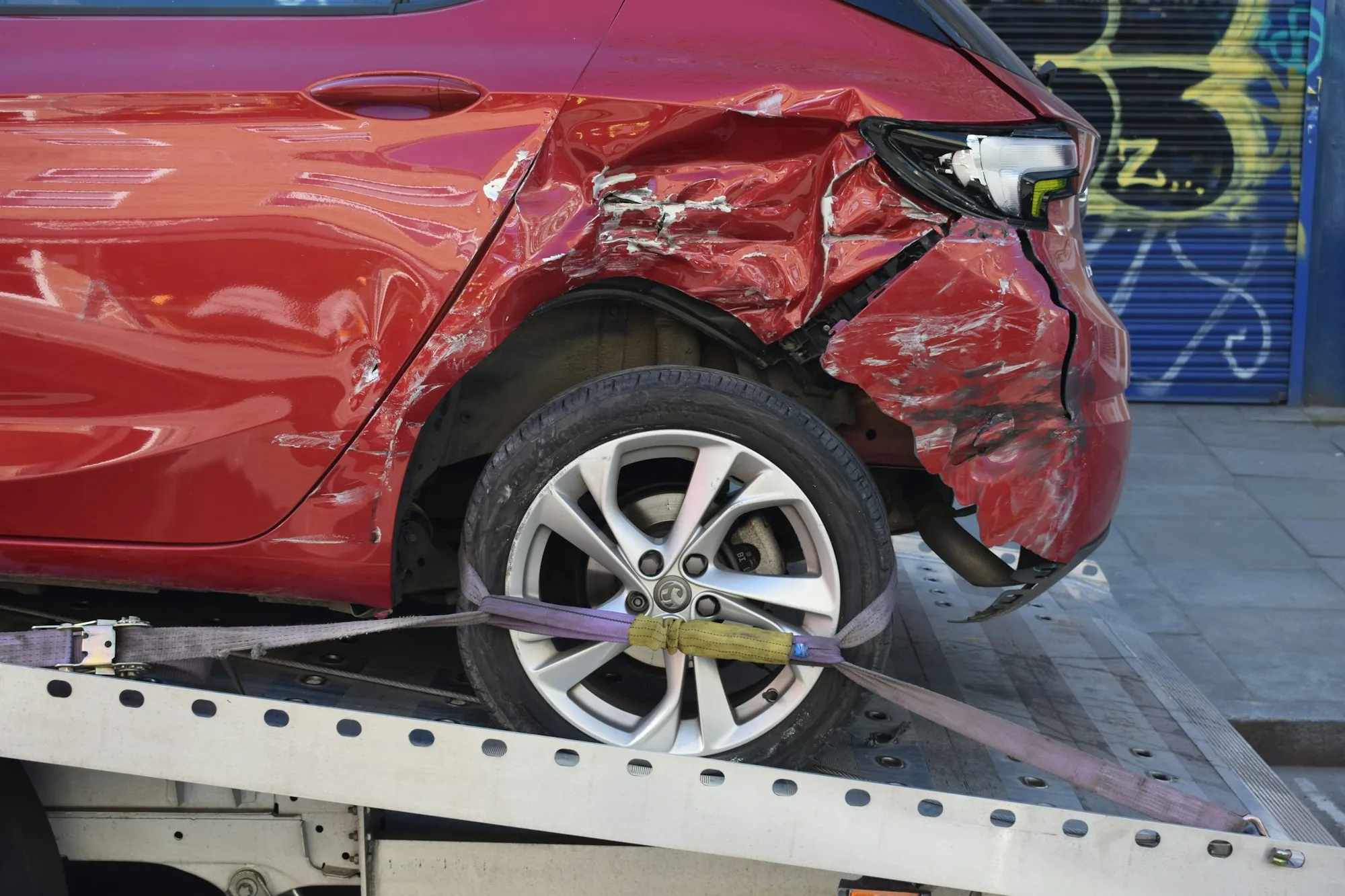
The Tow Is Part of the Repair
What happens between the crash and the shop matters more than most people expect. Towing a damaged car on its own wheels can drag a bent suspension, twist a weakened subframe or grind a cracked wheel, adding damage the claim then has to sort out. Once a car is pulled to a storage yard, fees build each day it sits. We arrange flatbed transport straight to our bay, or help get the car released from wherever it was taken. A car hauled off I-30 may land in a different yard than one towed from an FM 740 (Ridge Road) intersection or a back road toward McLendon-Chisholm, and we help track yours down. Once it arrives, it goes directly into inspection.
What We Take Care Of With the Tow
Most of this is phone work and paperwork. Our job is to keep it from landing on you while you're dealing with everything else.
Flatbed transport only
The car rides on the deck with all four wheels off the ground, so a bent axle or damaged steering isn't forced to roll.
Finding the yard from the crash report
If police called a rotation tow, we use the accident details to figure out where the car was taken.
Release forms explained
Yards usually want proof of ownership and identification. We tell you exactly what to bring or send so the release isn't held up.
Storage charges kept from growing
Each day in a yard adds a charge. Moving the car to our shop promptly is the simplest way to stop that clock.
Coverage checked for towing
Many policies include towing or roadside coverage. We help you see what yours includes before you pay out of pocket.
One location for the adjuster
The insurer is told the car is at our shop, so the inspection happens here instead of at a yard.
Condition recorded on arrival
We photograph the car as it comes off the truck, noting the damage and anything that may have shifted in transport.
Fluids, battery and belongings handled
Leaks are contained, the battery is disconnected when the procedure allows it, and personal items are bagged and set aside for you.
From the Shoulder to Our Bay
- Step 1
Let us know the situation
Tell us where the car is, whether that's the scene, a yard or your driveway. Share the claim number if you have one. We'll ask a few questions about the damage so the right truck is sent. If anyone is hurt, take care of that first, because the car can wait.
- Step 2
Arrange the truck and the paperwork
We line up a flatbed and, when needed, handle the release with the storage yard. You get a heads-up on what the yard will ask for. The insurer is told where the car is headed, so nobody goes looking for it in the wrong place.
- Step 3
Unload, photograph and inspect
The car is unloaded carefully and photographed. Fluids are checked and any leaks are contained. Then the estimate process begins, with a technician looking for damage beyond what's obvious from the outside.
What Our Help With Towing Saves You
Hidden damage stays undisturbed
Flatbed transport means the damage we inspect is the damage from the crash, not from the trip here.
Fewer days paying a yard
Moving the car promptly keeps daily fees from eating into your claim or your wallet, especially after a wreck out on FM 549.
One shop runs the whole thing
You make one call, and the tow, the inspection and the repair are coordinated from the same place.
Car Still at the Scene or in a Yard?
Tell us where it is and what you know so far. We'll arrange the move and explain each step.
Get the tow lined up — (000) 000-0000