
Paint and refinish
Auto Painting & Refinishing in Rockwall, Layer by Measured Layer
Paint is your car's first barrier against rust, and on some panels it sits right in front of a radar sensor. We match the color and keep the layers in spec.
Talk color and coatings with a painter at (000) 000-0000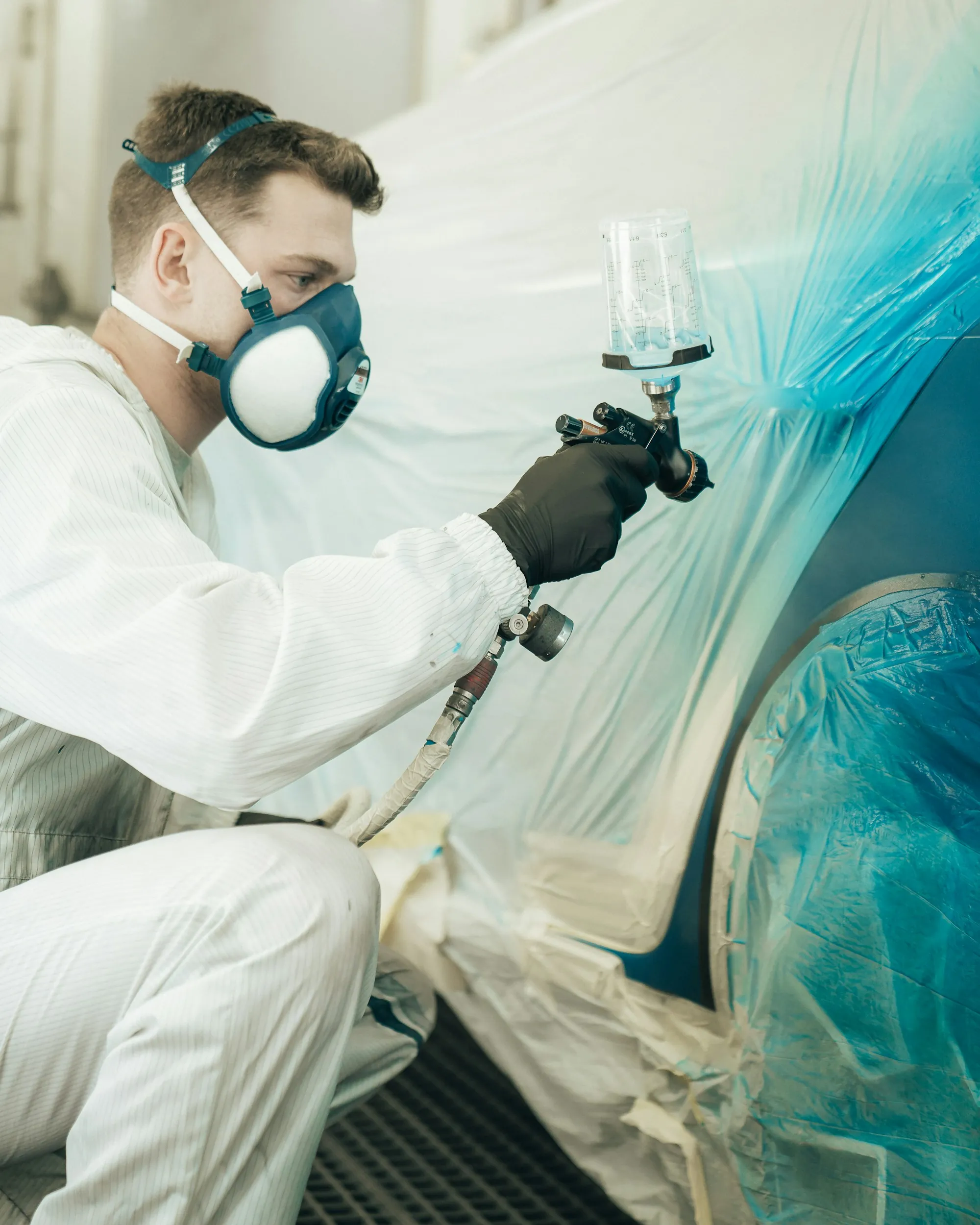
Paint Does More Than Look Good
A refinish has two jobs, and only one of them is cosmetic. Primer, base and clear form a sealed system that keeps moisture away from the steel or aluminum underneath. On many newer cars, the bumper cover or grille emblem also sits directly in front of a radar unit, and too much paint thickness there can weaken what the sensor sees. Manufacturers publish limits for that, and we check them with a film-thickness gauge. Color still matters, of course, so we read your actual paint, test the formula on a card and blend into the neighboring panels. Texas sun is hard on finishes, especially on cars parked outside near the lake or making the daily run toward Royse City.
The Layers and Checks in a Refinish
Here is how a panel gets from bare surface to finished color without shortcuts.
Color measured off your actual car
A spectrophotometer reads the paint on your car, sun fading included, so the formula starts from reality and not just the code.
A sprayed sample checked outdoors
We spray a sample card and compare it to the panel in daylight before any paint touches the car.
Corrosion layers rebuilt first
Any bare metal gets the right primer for the substrate, rebuilding the barrier the factory put there.
Film thickness kept in radar zones
On bumper covers and emblems that sit in front of radar, we measure total paint depth and stay within the maker's limit.
Masking that protects sensors and lamps
Cameras, parking sensors and lamp lenses are covered or removed so overspray can't cloud them.
Booth spraying in filtered airflow
Base and clear go on in a downdraft booth, which keeps dust out and helps each coat lay flat.
Blending that hides the transition
Color is faded across the seam so the repaired panel and its neighbors read as one surface.
Curing and cut-and-polish
Each finish is cured fully before sanding and polishing bring the texture in line with the factory clear.
How a Refinish Comes Together
- Step 1
Match and plan
We measure the existing color and decide where blending needs to start and stop. Sensor locations are noted so we know which areas carry thickness limits. Test cards are compared in daylight until the match is right.
- Step 2
Seal, then spray in stages
The surface is cleaned, sanded and masked, and bare spots are sealed with the correct primer. Color and clear are applied in the booth in controlled coats. We gauge thickness on sensor zones as the layers build.
- Step 3
Bake, polish, final outdoor look
The finish is baked, then sanded and polished to match the surrounding texture. Parts are reinstalled, and any sensor behind a painted surface is tested. We take a last look outside, where color differences are easiest to spot.
Why Our Refinishes Hold Up
Sensor zones get measured
Radar can struggle to see through paint that's too thick. We gauge those areas so adaptive cruise and automatic braking keep working as intended.
The barrier comes first
Color sits on top of a corrosion system. We rebuild that system properly so the panel stays sound under the paint.
Judged in sunlight, not booth light
Booth lights can flatter a match. We judge ours in sunlight, the way you'll see it every time you walk up to the car.
Paint That Needs a Second Look?
Tell us which panels need work and whether the car has front radar or parking sensors. We'll explain how we'd match it and what the refinish involves.
Ask a painter about your car at (000) 000-0000